SHORT PRESENTATION
|
The adventures of exile: Due to the constant circulation of falsehoods regarding my academic positions at Slovenian universities, I am attaching here a statement from Prof. Dr. Klavdija Kutnar, a mathematics professor, and the rector of the University of Primorska (from 2019 on) regarding my doctorate, my courses, my appointments (habilitations), and my employment at the Faculty of Humanities at the University of Primorska.
SLOVENIAN VERSION
FRENCH VERSION
|
Taja Kramberger (1970), PhD in history, poet, writer, editor, researcher, and translator.
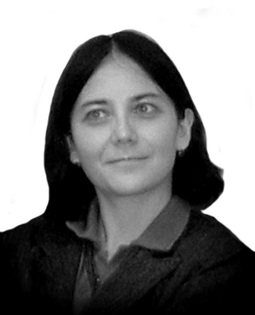
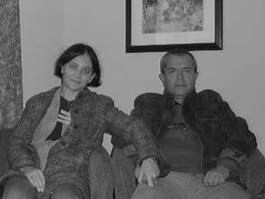
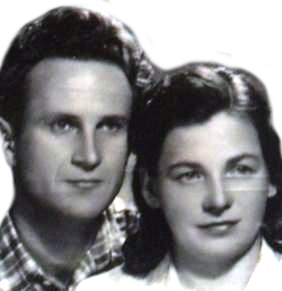
In her previous life, before the university purge at the Faculty of Humanities of the University of Primorska in Koper (Slovenia) in 2010, her exile and her permanent move to France (2016; together with her husband), she was a committed university teacher, researcher, cultural animator, and internationally renowned poet, writer, and translator. She was also active in the fight for human and social rights, and for women's rights. In France, she now runs a small digital publishing house, Addenda, gives occasional lectures, teaches English, and pursues her research and writing projects. She is married to Drago Braco Rotar, with whom she has lived for nearly three decades and collaborates on numerous research, artistic, and other projects. Because they did not allow themselves to be discouraged or intimidated by their national adversaries, they are today probably the two most obscured and disparaged intellectuals in independent Slovenia. So, dear reader: Allow a person to be judged by their deeds and actions and not only by their detractors. © All photos and photo-collages are from personal archive of Taja and Braco. (In addition to us and our family members, some of the photos were taken by Lado Jelen, Nada Žgank, and Mina Bulić. Please, do not use the photos without a permission.) Above: Taja in Koper, 2016 (by Braco Rotar); below: Taja & Braco in Paris, 2014. The advetures of exile: The Slovenian Wikipedia asked for my family tree, claiming that I was citing unverifiable information when I mentioned my father, mother, and my kinship with the writer Josip Jurčič. Look where we’ve ended up! Not a single other entry on Slovenian intellectuals and artists has such a reference, because no one has ever requested it. Soon we’ll have to submit our DNA to Wikipedia so they’ll believe we’re really our mothers’ children. And soon our original works—since, unfortunately, we wrote them ourselves—won’t be considered valid because they’re biased. Well, here’s a tree. It was made by Bojan Župančič, the son of my mother’s aunt, Zorka Kramberger (née Kutnar), whose mother’s maiden name was Jurčič.
They wanted still a reference for my mother, who served as a partisan courier in the Dolenjska region between 1943 and 1945 (when she was 16–18 years old). Here is my mother’s document proving this.
The story of Wikipedia demanding Slovene editors does not end. Now, the administrators of the Slovenian Wikipedia also wanted proof that my father had indeed defied the communist regime by refusing to give a nephew of one of the highest Yugoslav/Slovenian communist functionaries Edvard Kardelj (nephew was called Janez Kardelj) a passing grade unless he had studied the material (biology/chemistry) just like all the other students. The document below is a statement of one of my father's students (Tomislav Ceglar) in support of my father and against the headmaster of this secondary school Mr. Medved, who obviously harrased many people and pupils in "Gymnasium Moste" in Ljubljana (this is not the only statement in support of my father and against the headmaster I keep in our family archive). The headmaster finally dismissed my father (in 1964), who refused to give in to ideological pressure.
And again ..., the Slovenian Wikipedians wanted to see the ultimate proof that our family was under surveillance by the politicl police (udba, from 1966 on SDV). My brother Tone Kramberger, a professor at the Faculty of Social Sciences who has, sadly, since passed away, knew more about this, as he had examined and photographed some of the documents from the file (which I now keep). Namely, after Slovenia gained independence (1991), he examined our family’s file and told me some facts about it. Both documents are provided here below.
| ||||||||||||||||||||||||||||||||||||
POETIC PRESENTATION
It's a good thing my mother didn't want to have an abortion;
then - what would I do without me?
© TK, from the book Marcipan/ Marzipan, 1997, tr. by T. K.
then - what would I do without me?
© TK, from the book Marcipan/ Marzipan, 1997, tr. by T. K.
|
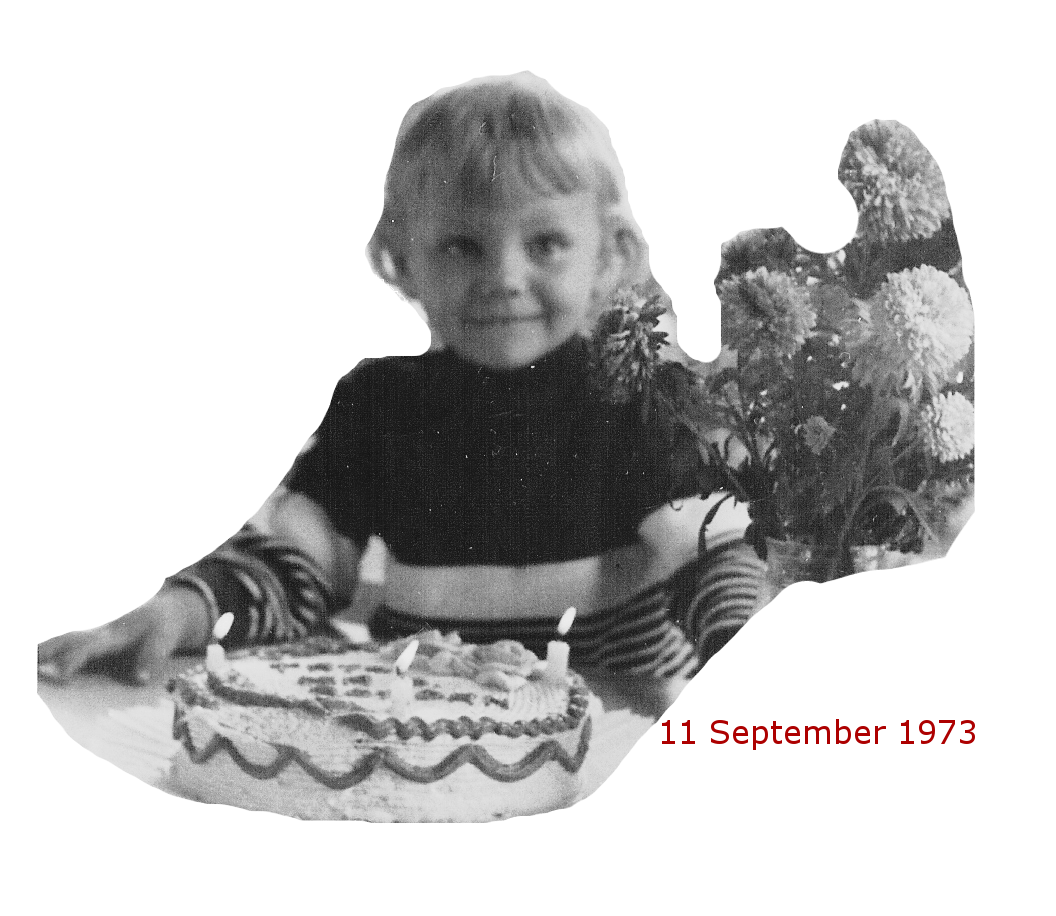
I had three years. Three candles on the cake. And the women in La Moneda had three minutes to decide between life and death ... © TK, from the book V tvojem objemu je prostor zame [In Your Embrace, There's a Place for Me], 2014, tr. T. K. and Margaret Randall All the things you have to swallow before
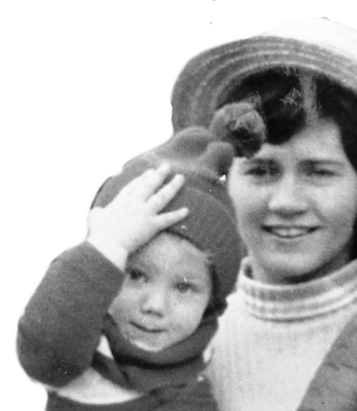
you set eyes on a patch of a fertile land. An eyelid, weighted heavily with the tears of those who were silenced but didn't bend under the burden. There's no one who would dedicate such a beautiful poem to me, Slavica said. There is. The best poems are still to come. © TK, From the book Mobilizacije / Mobilisations / Mobilitazioni / Mobilizations, 2004, reprint in 2011, tr. by A. Jelnikar RIGHT ON THE PHOTO: My big sister Slavica and little me ... 1980s
In this place the misapprehension between private and public spaces rules a life. Normalized are the troubles with the bonum communis' perception: the inhabitants purify their own window shelves from pigeon shit till shining bright, but maintain an entirely excremented common courtyard ... © TK, from the book Vsakdanji pogovori / Everyday Talks, 2006, tr. by T. K. The world spins beneath my feet
Music flows through the palette into literature Silent love renews the world Monsoon justice of the senses Holds me in its clutches and Donkey shadows of high school stagnation The sky turns above my head And the moon carries a fetus in Its round yellow belly Of the night sky © TK, from unpublished high school poems, 1986/1987, tr. by T. K. [1993: death of my father]
Alive amid tempests, calm through a storm. In the dark April night, on a day of the permanent call-up without arms, when one has to return one’s body, one’s life, as though they were borrowed skis, you left with no skis on, crossing the land which had supported you all your life, and the ski slope remained drawn on the face of my mother. Who mobilized you: God or non-God? On the day of the last mobilization, when the only movable joint in the head surrendered. But not you. I.
From the declaration "I love you," we developed a life, just as you develop a colorful carpet of memories, and marvel that there is no end in sight. All our work, all our commitments are nourished by it. From the words "I love you," we have constructed texts and woven into them threads of understanding and resistance that no Penelope can unravel. 2000-2012
[2007–2009: Researching the echoes of the Dreyfus Affair in Slovenia and Trieste as part of a research seminar originally conceived by me for undergraduate students at the Faculty of Humanities in Koper. The output was an exhibition.] They will see it on my face, they will read it in my posture, they will be convinced of my innocence. They saw nothing, read nothing, and consequently were convinced of nothing. Alfred Dreyfus, captain of the French army, father of two small children, standing tall as a menhir in the morning sun, is demoted before the entire military assembly of the École militaire. Dark apparitions of the spirit gather above the city. Below, in their shadow, stands a broken man with the features of Umberto Saba's lonely goat on his face: in him echoes the lament ogni altro male, ogni altra vita. [...] [2011: death of my mother]
Your vivid image, my mother, your clear face, dear Zorka, your lively gestures have moved into my dreams. Only there can I still touch you, and there you say to me: "Leave those rascals, they are not worthy of you. Throw away the stones behind your back. Go where you can be happy." I have names for everything, dear Zorka, and you had lines for everything. I would like the lines of your name to come alive in my letters at least once more, so that your gentle hands, which caressed me, could touch me at least once more. Dreams are journeys to you. I constantly check to see if the ticket is in my pocket. I constantly try to buy two return tickets at the station, but I can't. IMAGES ABOVE (first is from the newspaper Dnevnik, 29 June 2010; second from the newspaper Primorske novice, 29. June 2010). They announce the beginning of the Koper university purge, which started at end of June 2010 (and lasted - with its effects, lies, dissimulations, plaints, court processes and lynch for many years). Students initially sided with those who had been illegally and brutally dismissed, but then, after months and years of pressure, bribes, and blackmailing each one apart, most of them fell into appropriate line (with a few exceptions who completed their studies outside Slovenia and did not return). The flyer, held by two students, in the first picture reads: "The faculty management (=FHŠ) should resign, the best lecturers should stay!" The title of the article above the image is: "The Faculty of Humanities in Koper will be left without 46 lecturers." On the second image, the flyer reads "UP FHŠ leadership: culprits for the liquidation of people and the university!"
Our students helped us - the teachers and assistants illegally thrown out of the university - preparing first press conference about the announced university purge in early July 2010 (they even subtitled this video on the right in English). Maja Kohek, one of our best students, who introduced the conference, later finished her PhD (cum laude) in Spain. She now lives in Holland. THEATER GRITO
During a year of turmoil and constant struggles following the university purge (2011–2012), I staged my play—or rather, my poetry performance--"If the Poet is Silenced" (2011) with my students and a few fellow poets. In it, lo and behold, even the theater at that time was not free of political intrigues and disqualifications; after we had experienced many wonderful moments during rehearsals and had almost reached the premiere, the team was suddenly—overnight—split into two parts. One part, albeit belatedly but with certain perks (scholarships, career advancement, reintegration into the mainstream, etc.), joined the campaign against Braco and me, while the other part couldn’t catch its breath for a long time and couldn’t take a stand… As the only person of clear integrity in our performance team at that crucial moment, I remember the painter Alenka Koderman, who was the only one to speak out loudly, honestly and with moral courage and outrage against the mob of new, underhanded attackers who wanted to bring down our play. All in all, the lesson of this beautiful—and ultimately twisted—project is that, in a completely closed (spontaneous) totalitarian system, standing by the side of dissidents requires mature and upright individuals. We had overestimated some of our students—and perhaps that’s why, having seen them waver in the times of the purge, I wrote a play for them in the first place, hoping it would help them simultaneoulsy with its historical and personal references find their footing and engage in the necessary social and personal reflection. To no avail. Autumn 2012-Summer 2016
(exile in Paris) We rolled our warm seas, my love, over mountain passes and polar cold. Then we returned to the valley with thermal springs. We perfected our attention, sharpened our vision, locked the scroll of knowledge in our hearts. We sharpened our dreams into a fine saw. [...] Only in Paris we noticed that we had walked the entire way barefoot and that our feet were bloody and our mouths completely dry. © TK, from the book V tvojem objemu je prostor zame / In your embrace, there is a place for me, 2014, tr. by T. K. Photo above: dinner with old French friends at Maison Suger, December 2012. From left: Etienne Lakits, Amina Nordman, Braco, Marie-Elizabeth Ducreux, Daniel Nordman
From 2016 on
(permanent relocation to France) Home is where we are and where we'll be. We left our homeland a long time ago. We left the ghetto of the meek and the chosen. They would throw granite blocks at us if they dared to be brave. They would bow their haughty heads if they dared to be human. We left behind human misery that pretends to be wealth. We also left behind the century in which we lived. Home is where we are and where we'll be. © TK, from the book V tvojem objemu je prostor zame / In your embrace, there is a place for me, 2014, tr. by T. K. |
1970s
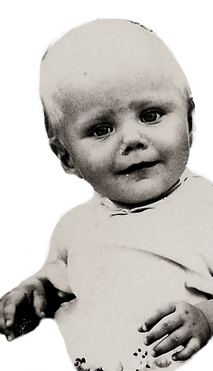
And I: the outcome of a family vote in February 1970: nobody imposed a veto and the embryo freely grew into me ... © TK, from the book Mobilizacije / Mobilisations / Mobilitazioni / Mobilizations, 2004, reprint in 2011, tr. by A. Jelnikar At times my father was like a cedar,
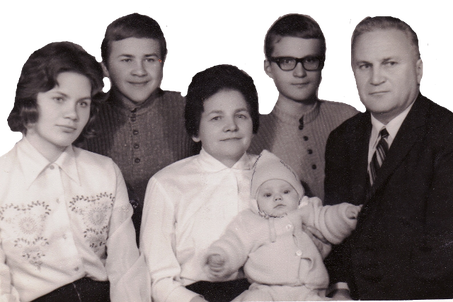
solitary, rooted in the garden of his life ... And my mother was at the tree, the sky and the earth in one . She inhaled the boy, whose feet froze in Russian's camps, to warm them, plant them within herself, and the tree could grow and the earth could again receive its juices ... Out of the intimate closeness of their bodies the four of us children arose. Stubborn little buds. We dropped from a cone like defiant seeds with large wings, robed in impregnated, thick flax. Toppled into the microclime of pines ... © TK, from the book Mobilizacije / Mobilisations / Mobilitazioni / Mobilizations, 2004, reprint in 2011, tr. by A. Jelnikar If you meet a snake, be friendly to her,
don't provoke her, just stand still as a petrified forest, so that you don't trigger the things you can't control. Childhood can die out if you are not careful, it can even become extinct to punish you if you are not gentle with it. © TK, from the book Marcipan/ Marzipan, 1997, tr. by T. K. Old friendships do not care about the growth of thirsty souls, nor about silent slips into the sea. When they speak, they speak gently, and no sun can tempt them with its silent glare. © TK, from the book Marcipan / Marzapan, 1997, tr. by T. K. Down here, in the clay, I guard
the silver keys of deep roots, above, silent questions that begin and end in silence. Neither there nor here is there anything like glory, the soles are burnt, but the path of the stone arrow is imprinted in the footsteps. © TK, from the book Marcipan / Marzapan, 1997, tr. by T. K. 1990s
Certainty is to live with a thwarted history beneath your feet, knowing that they have taken or will take and appropriate everything from you, but that you have no less because of it. © TK, from the book Vsakdanji pogovori / Everyday Talks, 2006, tr. by T. K. © TK, From the book Mobilizacije / Mobilisations / Mobilitazioni / Mobilizations, 2004, reprint in 2011, tr. by A. Jelnikar II.
From the letters connected in "I love you," we have created a special alphabet with an invisible and durable protective layer against tyranny and hatred. Embraced like letters in a diphthong, like one voice divided into two distinct intonations, we wait for the hour of farewell. © TK, from the book Z roba klifa / From the Edge of a Cliff, 2011, tr. by T. K. [...] The photograph after Dreyfus's degradation
shows a suddenly withered plant, like a desecrated place of memory after barbaric plundering. Can we really be sure that the desecrators have been subdued, that the hurricane of extermination has truly ended? Or has it perhaps only grown and imperceptibly engulfed the whole world, which now lives seemingly peacefully in the calm of its inner eye? © TK, from the book Opus quinque dierum (poetry collection entirely consecrated to different moments of the Dreyfus Affair), 2009, tr. by T. K. Between life and death is a continent of dreams, where we survivors go on night journeys to touch our loved ones once more. © TK, from the book Z roba klifa / From the Edge of a Cliff, 2011, tr. by T. K. Nothing remains. Between the Servite monastery and the sea is the house we are leaving. This house is neither a lighthouse nor a prison. Even for the Carpaccio family it was only a stopover. It is impossible to stay in these places. I tried. It wasn't enough. Braco, my love, let's go. I'm ready. © TK, from the book Z roba klifa / From the Edge of a Cliff, 2011, tr. by T. K. You have destroyed the university. I was there yesterday, the corridors are empty, students no longer meet in Foresterija to organize debates and cultural events, there is no longer the buzz that spilled over into music every evening. Are you satisfied with what you have done? You have destroyed the university. You have stripped the best students of the skin that protected them from you, turning them into bleeding strangers, dependent on your poisonous bandages, submissive to your perverse demands. Are you satisfied with what you have done? You have destroyed the university. You have replaced it with a dark tunnel of obsequious gloom-mongers and docile human shadows who should be on Freud's couch before they appear in the lecture hall. Foolish jewelers with no knowledge of how to recognize jewels, let alone how to cut, maintain, wear, or brand them. Are you satisfied with what you have done? © TK, from the book Z roba klifa / From the Edge of a Cliff, 2011, tr. by T. K. Even though there were fewer principled individuals around us at the time than there are fingers on one hand, we still managed to record a public rehearsal of our play, which you can watch at the bottom of this page. I’d say things were about 70% prepared there… And even that is a kind of victory, given the circumstances under which the play came to life on stage. I’ll just add that I have nothing to do with that part of the theater team (former students and ex-colleagues united later in the Campo Krizi group) who after years used some of my translations of protest songs for their music project without informing me in any way or asking for my permission. Since 2014, I have participated in Slovenian projects only very rarely and after careful consideration (in a handful of projects over the past decade)—and even then, some kind of trick (against me) often happens that I cannot foresee, because I do not operate within the political networks through which false information spreads in a chain-like and targeted manner through "innocent indicviduals". In any case, I no longer collaborate with those who, at an opportune moment, joined the political campaign against Braco and me—even if only by quietly acquiescing to the lies and thereby helping to spread them. In 2012, when we came to Paris, no one understood that the purges were a systemic part of a new brutal socio-political paradigm that was just beginning to take shape, but which immediately hit rock bottom in a small subalpine country of Slovenia. What we experienced 15 years ago, alone and very isolated (our colleagues at the EHESS mostly did not even want to hear what had happened to us), is happening today to American scientists and intellectuals in general, whom France is now, rightly of course, welcoming with open arms. The superpower of the country from which the exiles come today surely helps in this regard. We were not that lucky. But don't forget: Trump's wife is from our/my native country, a hermetically sealed and well hidden (proto-totalitarian) ideological laboratory. Micro and macro structure of the same type go along well.
Braco received an IAS-Institute for advanced study research scholarship (2012/2013; I was a recipient of the same network IAS back in 2003 at Collegium Budapest), so we were able to take first refuge in Maison Suger in Paris. If I easily got the fellowships before, I couldn't get any after 2012 - I believe my compatriots helped with it. In these years I abandoned preparing the applications as it was just a waste of time. The only significant exception was the FMS (Fondation pour la Mémoire de la Shoah in Paris), which supported me to visit European archives, but this was not enough to live on for another month, let alone to study the rich archival sources I had collected. Almost a decade of turbulent years for Braco and me had to pass before I found the time and space to do the intellectual work on these sources that I had gathered. Luckily, Braco got that salary of the IAS. After ten months, this solid income allowed us to live still three modest years in Paris. We were lodged in a small studio on rue de la Harpe in 5th district. Considering the equipment and smallness of the studio, it was a rather expensive offer, but it was an opportunity at the right time, and we had no other, so we grabed it ... We turned 29m2 into a small private studious library. Despite all circumstances, these were three lovely years of relative peace in Paris, full of tenderness, creativity, writing, translating, visiting seminars and conferences, daily swimming in the city piscines, and long night and day walks around the city, exploring our beloved Paris - while reporting to each other what we researched or read separately during the day. Photo above: in our garden in Loiret
Now we are here in the garden of our exile Peace reigns, as it has not done for a long time The garden is becoming our reservation and treasure trove at the same time 34,000 books in the house, just as much wealth of species outside it It is our private jungle that resists any definitive understanding A small fenced-in plot of freedom Can one ask for more? © TK, from the book Najina džungla / Our jungle, in preparation for 2026, tr. by T. K. |
Above: A recorded open-rehearsal in Murska Sobota, 16 June 2012
Theater play
If the Singer is Silenced
by Taja Kramberger (2011)
Text and Script: Taja Kramberger (adaptation, translations, and original texts)
Directed by: Taja Kramberger and Sabina Šabić
Musical arrangements and performances: Eva Brajkovič - vocal, Tomaž Gregorc, Matjaž Karlovčec, Žan Bezek
Narration: Maja Kohek and Samuel Friškič
Poem reciters: Veronika Dintinjana, Taja Kramberger, Alenka Koderman, Iztok Osojnik, Dean Koban,
Original dance interludes: Anja Slavec
Interrogators: Anka Bitenc and
Voice of the Judge: Jan Bezek
Stage elements, cage, backdrops and other props: Alenka Koderman
A dramatic musical-theatrical performance featuring poetry of resistance and exile from various oppressive regimes around the world (both left-wing and right-wing) and dance is an adaptation of a short text by Karl Kraus (some say it was written by ) and an original script by Taja Kramberger.
The opening scenes are set against the backdrop of the final decades of the Habsburg Monarchy and the subsequent Yugoslavia (both the Kingdom and the Federation), a period marked by visceral rejection of genuine artistic and intellectual innovations as well as any consistently creative practices. Through a series of brief scenes, we learn of the fates of B. Smetana, V. Bartol, A. Bruckner, A. Voda, and H. Wolf. Subsequently, using the example of an unnamed female poet, the performance symbolically illustrates the workings of the current cultural environment and its mandarins, in which—given the aforementioned past—no genuine (structural) innovations can be found; only the methods of exclusion have been modernized and refined.
Throughout the entire performance, dance interludes and recited or set-to-music poems are woven into the theatrical scenes; with their defiant radiance and continuous resistance to oppression—and without succumbing to the role of victims—they shift the semantic focus of past situations, contrasting and softening the action on stage.
If the Singer is Silenced
by Taja Kramberger (2011)
Text and Script: Taja Kramberger (adaptation, translations, and original texts)
Directed by: Taja Kramberger and Sabina Šabić
Musical arrangements and performances: Eva Brajkovič - vocal, Tomaž Gregorc, Matjaž Karlovčec, Žan Bezek
Narration: Maja Kohek and Samuel Friškič
Poem reciters: Veronika Dintinjana, Taja Kramberger, Alenka Koderman, Iztok Osojnik, Dean Koban,
Original dance interludes: Anja Slavec
Interrogators: Anka Bitenc and
Voice of the Judge: Jan Bezek
Stage elements, cage, backdrops and other props: Alenka Koderman
A dramatic musical-theatrical performance featuring poetry of resistance and exile from various oppressive regimes around the world (both left-wing and right-wing) and dance is an adaptation of a short text by Karl Kraus (some say it was written by ) and an original script by Taja Kramberger.
The opening scenes are set against the backdrop of the final decades of the Habsburg Monarchy and the subsequent Yugoslavia (both the Kingdom and the Federation), a period marked by visceral rejection of genuine artistic and intellectual innovations as well as any consistently creative practices. Through a series of brief scenes, we learn of the fates of B. Smetana, V. Bartol, A. Bruckner, A. Voda, and H. Wolf. Subsequently, using the example of an unnamed female poet, the performance symbolically illustrates the workings of the current cultural environment and its mandarins, in which—given the aforementioned past—no genuine (structural) innovations can be found; only the methods of exclusion have been modernized and refined.
Throughout the entire performance, dance interludes and recited or set-to-music poems are woven into the theatrical scenes; with their defiant radiance and continuous resistance to oppression—and without succumbing to the role of victims—they shift the semantic focus of past situations, contrasting and softening the action on stage.
They ask me about poets (less about female poets)
from the country I come from.
I could – and would gladly – tell them about other
poets, both male and female, de verdaderos poetas,
who have been eroded from the country's directories
and are hardly known to anyone.
Yet those whom I avoid as much as I can
make my blood run cold, so that I can only hiss about them.
They ask me how many of my books are translated,
how many awards I have received.
I could – and would gladly – tell them
about different kinds of translations
(of the real into the symbolic and imaginary)
and about different kinds of awards
(love and satisfaction).
However, I will not allow these translations
and awards, which I do not have,
to be taken away from me, because
I have earned them through hard work.
But they don't ask what the relationship
between the apparent and the real is like
in the country I come from,
nor do they ask how masks and appearances
multiply to the point where reality evaporates.
To the point where the same people
can be fascists in their own country,
but outside it they are accepted as committed writers,
dissidents, or even fighters for rights.
I am no one's dividend, yo no,
and I am no promissory note.
I am not the boomerang of the nation,
the flat scout of the collective that returns, not me,
into the cirrhotic ravine of dreams
of its own greatness.
I am supported by landscapes –
undivided oceans, forests,
undivided blue deserts, oases and gardens,
which many do not even dream of.
And so it is better, OH, to just sigh
– the exclamation of license plates in Ohrid –,
and leave the annoying questioners
to their own consumption of history
and chewing on redundant images,
petrified and indigestible fruits
of poetic fame.
© TK, from the book Vsakdanji pogovori / Everyday Talks, 2006, tr. by T. K.
from the country I come from.
I could – and would gladly – tell them about other
poets, both male and female, de verdaderos poetas,
who have been eroded from the country's directories
and are hardly known to anyone.
Yet those whom I avoid as much as I can
make my blood run cold, so that I can only hiss about them.
They ask me how many of my books are translated,
how many awards I have received.
I could – and would gladly – tell them
about different kinds of translations
(of the real into the symbolic and imaginary)
and about different kinds of awards
(love and satisfaction).
However, I will not allow these translations
and awards, which I do not have,
to be taken away from me, because
I have earned them through hard work.
But they don't ask what the relationship
between the apparent and the real is like
in the country I come from,
nor do they ask how masks and appearances
multiply to the point where reality evaporates.
To the point where the same people
can be fascists in their own country,
but outside it they are accepted as committed writers,
dissidents, or even fighters for rights.
I am no one's dividend, yo no,
and I am no promissory note.
I am not the boomerang of the nation,
the flat scout of the collective that returns, not me,
into the cirrhotic ravine of dreams
of its own greatness.
I am supported by landscapes –
undivided oceans, forests,
undivided blue deserts, oases and gardens,
which many do not even dream of.
And so it is better, OH, to just sigh
– the exclamation of license plates in Ohrid –,
and leave the annoying questioners
to their own consumption of history
and chewing on redundant images,
petrified and indigestible fruits
of poetic fame.
© TK, from the book Vsakdanji pogovori / Everyday Talks, 2006, tr. by T. K.